
 admin
admin Pakistan and Germany Deepen Business Ties: A New Push for SME Investment
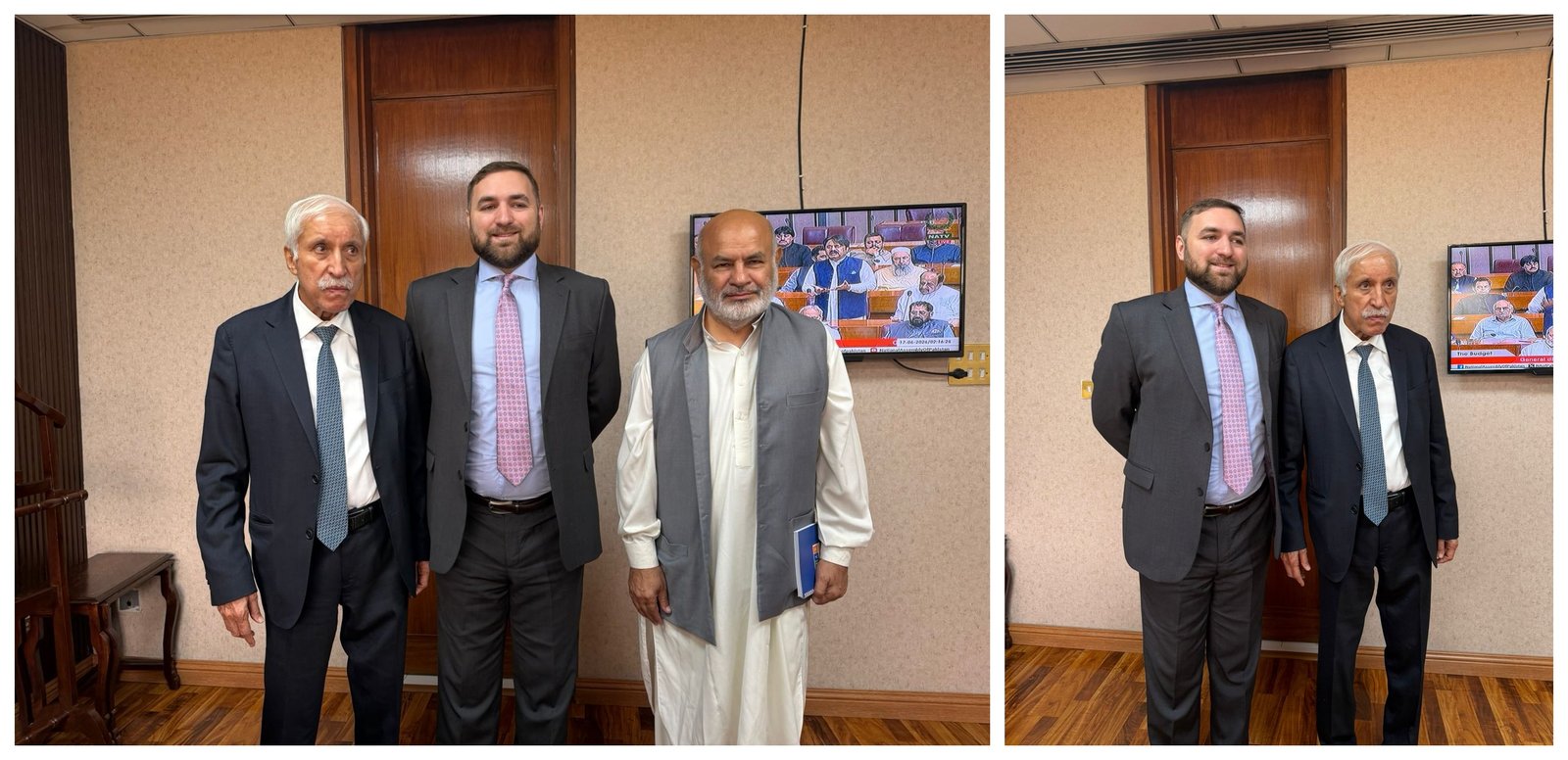
Pakistan’s drive to attract foreign capital took a meaningful step forward this week when Federal Minister for the Board of Investment, Qaiser Ahmed Sheikh, met a high-level German delegation in Islamabad. The meeting placed small and medium enterprises (SMEs) at the centre of a renewed Pakistan–Germany economic partnership, signalling fresh momentum for investment cooperation, skills development, and access to European markets.
A Strategic Meeting Focused on SME Investment
The German delegation was led by Matthew D. Shaw, the Pakistan Country Representative of BVMW, Germany’s largest SME association, also known as the German Mittelstand. The discussion centred on expanding investment between the two countries, with particular emphasis on cooperation in the small and medium enterprise sector — a segment widely regarded as the backbone of Germany’s industrial success.
Welcoming the delegation warmly, Minister Sheikh praised Shaw’s long association with Pakistan and acknowledged his role in strengthening business links between the two nations. Shaw, who has represented BVMW in Pakistan since 2024, briefed the minister on the association’s scale. BVMW represents more than 30,000 member companies and maintains a presence in 80 countries, making it one of the most influential SME networks in the world.
Shaw’s personal ties to Pakistan run deep. He first visited the country in 2008, and his business interests now span Germany, the United Arab Emirates, Saudi Arabia, and Pakistan across multiple sectors, including financial services, oil and gas, LPG, real estate, marketing, and information technology.
Why Pakistan Is Positioning Itself as an Investment Destination
A central theme of the meeting was Pakistan’s potential as an attractive and open market for foreign investors. Minister Sheikh highlighted one of the country’s most compelling advantages: its young population, with nearly 60 percent comprising youth. This demographic strength, he stressed, offers a vast pool of talent and a growing consumer base that international investors cannot afford to overlook.
The minister emphasised that the government is committed to providing a business-friendly environment through regulatory reforms and investor facilitation measures led by the Board of Investment. He noted that engagements like this one reflect growing international confidence in Pakistan’s economy.
Drawing on his own background in the business community — including his former role as President of the Karachi Chamber of Commerce — Sheikh underlined the government’s focus on promoting joint ventures and easing the path for foreign investors. The German delegation, in turn, praised the ongoing regulatory reforms, noting that German investors are typically risk-averse and value transparent policies and a stable environment. For this reason, they viewed Pakistan’s current reforms as essential to building investor confidence.
Perhaps the most concrete outcome of the discussion was Shaw’s plan to bring 20 to 30 German companies to Pakistan, while simultaneously helping Pakistani businesses gain access to European markets through the EU–Pakistan Business Network. He requested the cooperation of the minister and the Board of Investment to make this happen.
The conversation also touched on the supply of German, Swiss, and Austrian machinery — equipment internationally recognised for its world-class standards and long-lasting performance. To support this, Shaw outlined plans to provide guaranteed loans of up to €10 million for Pakistani SMEs to purchase high-quality European machinery. He added that the establishment of a dedicated SME-focused investment fund is also under consideration.
Minister Sheikh welcomed these initiatives and assured the delegation that the Board of Investment would extend every possible facilitation to investors and partners working towards Pakistan’s economic growth.
Skills, Jobs, and Remittances
Beyond capital and machinery, the meeting addressed human capital. Shaw briefed the minister on plans to establish vocational training institutions in Pakistan, designed to equip young people with skills aligned with German market needs. The goal is twofold: to create employment opportunities for Pakistani youth abroad and to boost the country’s remittance inflows — a vital source of foreign exchange.
To support this vision, Shaw advocated for easing visa processes for Pakistani nationals, removing one of the practical barriers that often limit cross-border mobility and employment.
Minister Sheikh responded positively to these proposals, noting that Pakistan has no shortage of talent or products. The real need, he explained, is to connect Pakistani skills and goods effectively with European markets. He recognised skill development, international market access, and institutional collaboration as key to bridging the gap between Pakistani businesses and their European counterparts.
A Global Invitation and a Lighter Moment
In a gesture underscoring the strengthening relationship, Shaw invited Minister Sheikh to attend Germany’s upcoming “Futures Day,” noting that his participation would send a strong global message that Pakistan is open for business.
The meeting also had its lighter moments. Shaw playfully observed that “Qaiser,” derived from the German word “Kaiser,” means king, while “Sheikh” in Arabic similarly carries connotations of leadership , a small but symbolic note on the shared spirit of the partnership.
What This Means for Pakistan’s Economy
The Pakistan–Germany engagement reflects a broader strategy to reposition the country as a credible and welcoming destination for foreign direct investment. By focusing on SMEs, the partnership targets a sector capable of generating widespread employment, transferring technology, and integrating Pakistani businesses into global value chains.
For Pakistani entrepreneurs, the prospect of guaranteed financing, access to premium European machinery, and entry into the EU–Pakistan Business Network represents a tangible opportunity. For the wider economy, the focus on vocational training and remittances aligns with national priorities around youth employment and foreign exchange stability.
Under the leadership of Minister Qaiser Ahmed Sheikh, the Board of Investment has reaffirmed its commitment to promoting international partnerships, advancing SME sector development, and making Pakistan an attractive investment destination. If the plans discussed translate into action, this meeting could mark the beginning of a deeper and more productive economic relationship between Islamabad and Berlin.